Showing posts with label sci-fi. Show all posts

Sunday, March 19, 2017

catskinner's book 1: My Analysis

You know it's bad to judge a book by its cover, although we do it all the time. So here's an experiment: Quick, look the cover art on the right and tell me (well, you know what I mean) your first thoughts. Be as prejudiced and superficial as you want.

If you had to guess its genre, style, or typology, what would it be? Emo poetry? A gothic novel pastiche? The autobiography of a gardener gone mad? Well, whatever it was, I'm sure it wasn't "a thriller starring a paranormal symbiote -a human with a predatorial daemon inside his head- and parasitic alien entities, with spirit-driven genetic engineering and X-files levels of cover-ups."

I don't know why Misha Burnett chose that cover style or what hidden symbolism lies behind them or their titles, but if he ever wants to change the vibe, he could try to imitate one of those Shudder Pulp covers, with an almost naked damsel chained to an operation table, ready to be dissected by a demented doctor while the hero struggles with the mad doctor's mutated underlings. And it would be somewhat close to a real scene from the book.

I mention this in case a random person with no knowledge of the book is reading this. Sure, the short Amazon synopsis for this book will dispell any possible genre confusion or mislabel, but you'd be surprised how many people don't even read that. Having said all that, let's jump into the meat of our business.

James Ozwryck (pronounce Awesig -not his real surname, by the way-) is a young introvert who works at a run-down hardware store and occasionally dreams of living a more fulfilling life someday. That would be common stuff for a tale about the woes and anxieties of a blue-collar worker, if it weren't for the fact that the store is a front, James is a professional hitman with abnormal strength, and, oddly enough, he has never killed anybody. At least he likes to think so. 

It's actually the demonic-like entity living inside and alongside him, called catskinner (lower case, it's important) who takes control of his (their?) body when someone needs to die or some unnatural feat of speed and strength is required. Also, his boss, Victor, who provides him with the targets, doesn't sleep, is ugly as hell, lives in a giant fridge which doubles as an office, and is probably undead. 

I must note that that weirdness isn't the plot or the events that trigger the story. That's the introduction, -his normal life- which theoretically could have gone on like that forever if it had not been for Victor's (and almost his own too) murder. This story is therefore not your average "normal man's life is upturned and thrown into disarray by unknown forces;" it already starts weird, and then it gets even weirder. The fantastic elements in his life, which James had taken for granted as personal idiosyncrasies, are revealed as being part of a bigger whole (although it is quickly stated that very little of its true nature is really known.) In other words, he is not the only freak in town.

You could say that the story is also about James changing and maturing, and leaving his mind-numbing apathy behind, something that is triggered by two events: Victor's murder (who had been his guardian as well as his exploiter,) and meeting Godiva. The first incident forces him to go beyond the brutal (but predictable and comfortable) realities of his life as someone else's tool, and the second gives him someone beyond himself to care about.

Godiva, who is also not entirely human, many not be your standard romantic partner, and it's probably not what James would have chosen (even though it superficially *looks* like your typical male fantasy,) but from a storytelling point of view, it works like one. She humanizes James, gives him someone to care about and a reason to live beyond simple survival (that's catskinner existential imperative/function, anyway.) They may be a pair of freak weirdos, but they make a lovely couple nonetheless. I'm not sure I want to see them naked, though.

"Disappointed" would be too big a word, but it was a bit of a letdown that the story didn't follow some threads it had hinted at the beginning, not necessarily because the new direction it took was the wrong one, but because I think the other would have been superior. The story started a bit like a mystery drama, with a few touches of hardboiled urban survival thrown in the mix. There were three specific mysteries to solve: (1) Victor's murder, (2) whatever was stolen from Victor's safe, and (3) how was James/catskinner incapacitated with an apparently magical sigil. That final one may not be very important since it is probably just a plot device to avoid a fight so soon, but it still has important worldbuilding implications concerning what powers some people (and entities) seem to possess there. The description of the consequences of that sigil is also one of the best scenes of the book, so there's that too.

The third one can be dismissed then, but I find it odd that the first seems to disappear so quickly from James' mind (or so it seemed to me) and that the second becomes almost a footnote, especially since the contents of the safe are mentioned (The Book of Thoth), and they seemed important enough. After that point, James loses a bit of its agency as the main character/investigator, and he is carried along by what happens (and crashes) around him and the people he finds along the way, usually after a fight, when allies, new or old, appear or disappear. And since he is not the only main character (there's also catskinner there,) this downplays him even more. That is, by the way, something James hints at the end of the book:

"What's been happening to me lately has not been conversations. What's been happening is that people make bizarre enigmatic little comments in my general direction, and weird crap comes out of nowhere and tries to kill me. And then when I say, hey, how come weird crap keeps coming out of nowhere and trying to kill me? everybody tells me I don't understand what's going on."
Even the emotionally-stunted psychopath inside his head seems to know much more about what is going on (and, oddly enough, it apparently chooses not to disclose it,) than him.

After that, an explanation is given, although I think it would have worked better if it happened earlier (there is no big revelation anyway,) especially since the end is somewhat abrupt (although not unfulfilling) and a few pages more to build a good hook for the next book (e.g. hints of a future problem) would have helped.

It is in the sense of investigation and discovery, and in the dialogues that shine a light on the nature of this supernatural world, where I believe the book excels. In fact, my favorite moments were the dialogues with those at the edge of that supernatural world (e.g. with Russwind, about his past.)

In any event, the crux of the story is the James/catskinner duo, and not surprisingly the series is named after the second since it is the mystery surrounding that strange entity what moves the whole plot and, to a considerable degree, the reader's interest. The interactions between the two of them are also some of the most amusing moments, especially because they are embedded as part of the narration itself. This book is written from a first-person narrative, but the trick is that there are actually two entities watching, and they both share the same point of view (James' eyes.) catskinner's comments and thought processes (although not all of them, probably) are part of the narration itself and they are written in italics*. This means that sometimes the narrator himself speaks directly to another character (catskinner,) engaging in a conversation that appears as part of the narration and only they (and us) see.

*And with an uncommon punctuation. It never uses upper-case letters, not even when using the pronoun I. i once met a person who wrote like that on-line, and he was edgy in extreme, quite unhinged and seemed possessed, so I guess bad grammar and a bizarre punctuation sometimes may be a sign of daemonic influence! It may explain a few things about Twitter, at the very least.
[*extra: I just realized the whole cover of the book is written using catskinner's style]

I thought that was a neat literary experiment, and I would not have minded (in fact, I would have enjoyed it,) if Burnett had decided to be even more experimental while playing with the limits of traditional narratives. And speaking of which, I was pleased that the story avoided the usual pitfalls of many postmodern stories: the temptation of self-referentialism and going excessively meta all the way down. Since this is a story that could have gone from zero to Philip K. Dick in 2.5 seconds, I was pleased to see that there was little of that nonsense. Although the "entities" that are behind the whole mess clearly dance and play with the limits of madness and reality, those nonetheless exist. James may be confused because he doesn't understand what is going on, but he knows perfectly well that what is going on is real and that there is something to understand.

And even if the mystery isn't yet explained, and the names (if they have any) and goals of the hidden forces are not yet revealed, the intrigue is strong enough to compel me to read the next books.

Thursday, September 29, 2016

Nethereal, Chapters 61-66 and Epilogue

Chapter 61: Jaren shoots Zebel, who drops his father’s soul stone.  Mephistophilis splits bodily from Teg and offers pardon.  Vaun reveals that the baal wants to subvert the Last Working to his own ends.  Mephistophilis attacks the crew of the Exodus, defeating each in turn until Vaun’s void drains the life from the demon.  The baal reappears in Teg’s body and feeds the last soul stone to the oracle.  A god breaks free from the altar in a flurry of geometric shapes.

Narr reveals himself as the secret head of the Steerman’s Guild to Malachi in attempt to talk the Guild master out of his revenge.  When that fails, he blesses Malachi’s wish to slit Jaren’s throat.

The sacrifice of high prana Gen souls is designed to replace Thera with one-eyed Elathan as the god around which the Last Working is cast. Mephistophilis intends to follow Elathan out of the universe as he is tired of living in a universe that winding down like an old clockwork watch.

***

Chapter 62: Mephistophilis is still alive, having decoyed Jaren and Vaun into killing Teg so that he could complete the sacrifice.  He flees towards Timtzum, where Zadok created the universe and where the Words of Creation are kept.  Elena appears, warns everyone what could happen if Mephistophilis reaches the Words of Creation, and resurrects Teg.  The crew chases after the demon lord, pursued by monsters.

To open the gate to the Ninth Circle, Navkin warps the city of the Eighth Circle into concentric rings.  By spinning them in all directions like a gyroscope, the gate opens to a land of ice, sleet, and hail.

Vaun states that Thera is of the Void and Zadok of the Well, which aligns with traditional descriptions of yin and yang.  However, the mythology of Nethereal states that Zadok and Thera are ever fated to kill and transform into each other, which might explain why Thera, in the form of Elena, has been connected to the light of the Well throughout the adventure.

The icy description of the Ninth Circle is similar to the frozen lake at the center of Dante’s Inferno.

***


Chapter 63: One last gate remains in the Ninth Circle, which takes the Exodus to Mithgar.  They emerge in the midst of a battle the Navy’s rebels are losing to the Guild fleet.  Jaren moves to support the rebel fleet, shattering the Guild formations.  The Serapis and her supporting vessels emerge from hiding and ravage the Exodus, taunting Jaren on the comms. Jaren abandons ship in the Shibboleth alongside a shuttle presumed to be Elena’s.  Meanwhile, the Exodus’s armor bulges and buckles under the Guild fire, breaking open to reveal the pale form of Elathan.

In hindsight, it does not surprise me that there was another gate in the Ninth Circle, or that it led to Mithgar.  Dante left the frozen lake of his Inferno by climbing down Satan’s legs before climbing through a cavern to the Earth’s surface. 

The armored angel/god once in the technological service to humanity but now berserk is similar to the secrets of Evangelion’s mecha.

***

Chapter 64: Given the choice between chasing the Shibboleth and destroying the Exodus, Malachi chooses the latter.  Thus he has a front-row seat to a cosmic horror finslapping his supports into dust.  Meanwhile, Jaren positions the Shibboleth behind the Serapis and fires on Elathan.  The god of shipwreck charges the Serapis, worrying the ship like a rat before flinging it down to Mithgar’s surface.  Elathan flies towards another gate in the stars, joined by Elena’s shuttle and remnants of the two battle fleets.  Jaren orders the Shibboleth to pass through the gate.  On the other side, they find the Mobius strip from Deim’s dream, complete with foreign words on its surface.  Golden beams lance out, destroying many ship.  The Shibboleth attempts to land, but is shot down.

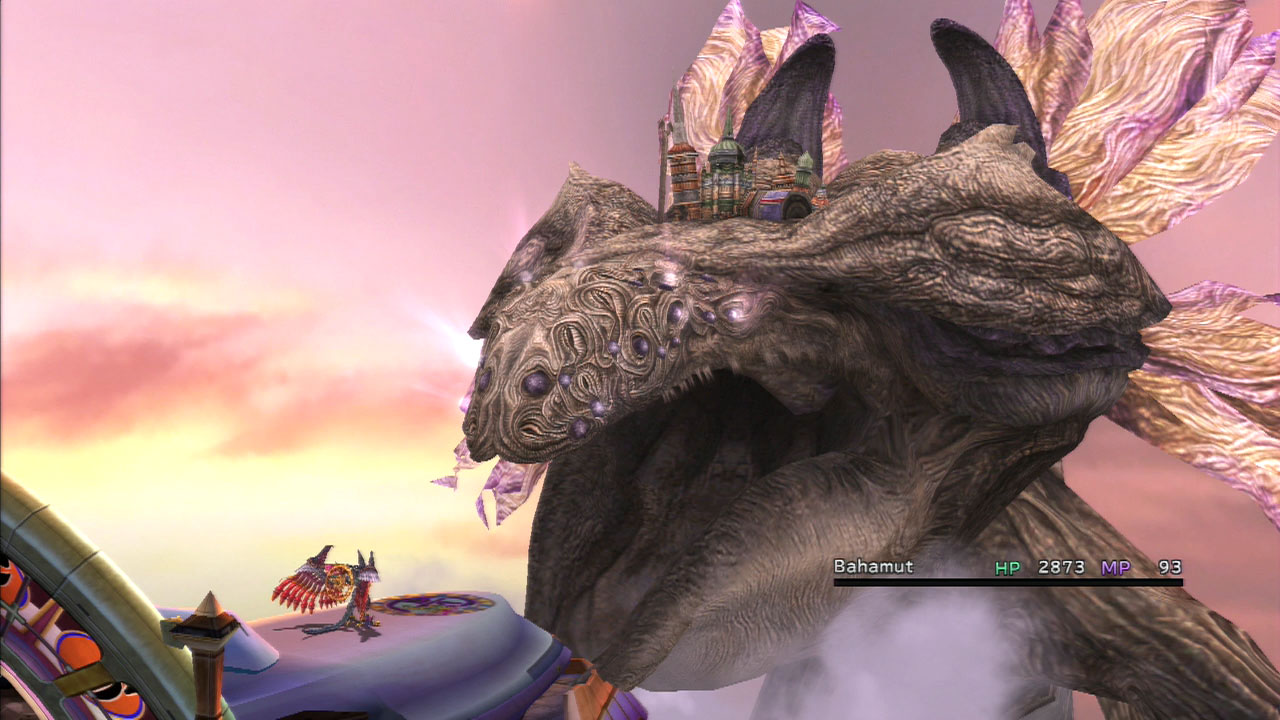
The description of a baleen monster that is part whale and part ray recalls Sin from Final Fantasy X, although, as a 3-D Final Fantasy game, the resemblance is likely accidental.  It’s been a while since I’ve played FF VI, which does have direct influence on the creation of Nethereal, so I don’t remember if there is a beast similar to it in that game.

Malachi stares into the eye of Elathan before the attack.  It is uncertain if he passed his SAN check…

The Shibboleth flies through one last gate, somewhat similar to the transition in the Divine Comedy from the Purgatorio on Earth to the Paradiso of Heaven.

***


Chapter 65: Jaren and his crew leave behind the wreck of the Shibboleth to pursue Mephistophilis through the golden streets of Tzintsum.  The Gen captain confronts the baal, which devolves into a fight.  Mephistophilis trounces Jaren and Teg, saying that he would have given them honors for their act of service.  As he prepares to leave the universe, Navkin sacrifices her hellhound to give time for Teg to recover and rush the baal.  Jaren manages to shoot Mephistophilis with a rodcaster.  Although Tzimtzum is awash in molten metal, the baal is not dead.  Jaren tells everyone to run and front loads his rodcaster.  Both baal and Gen disappear inside a small sun. 

Elena appears, saying goodbye as she must leave with Elathan.  Otherwise, to contain Thera’s soul within herself, she must read the Words of Creation and end the world.  If another person reads them, she might be able to stay.  As the words can only be read by a necromancer, Deim must beat Vaun to the Last Working.

Tzimtzum is the golden city that Jaren dreamed of.

Necromancer here means Teth user, which explains why Elena, as Thera’s soul, can read the words.

There is a passing resemblance between Mephistophilis and Sulaiman, the blond priest of Midras.  The baal’s statement, “Midras is gone”, is also of interest.  I do not see the two characters as being the same, but sharing characteristics of the people that worshiped Midras.  Another name to watch for in Souldancer, just to see if –and likely when- Midras takes on a more prominent role in the story.

Zebel’s siring of Navkin makes Elena a motherless daughter of a fatherless mother.  No male genetic material made Navkin, while Elena was a combination of two male fathers’ genetic material born spliced in Navkin’s egg cell.  This symmetry was probably necessary to prepare the vessel body for Thera’s soul.

***


Chapter 66: Dei falls for Vaun’s decoys.  Elena dispels them, while he runs towards the temple at the center of Tzimtzum.  On a tower reminiscent of Babel, Vaun prepares to read the Working.  Deim attempts to stop him, but Vaun casts him down from the tower.  The First Working is read.  Deim awakens and looses an echo of the Working stored within the artifact on his belt at Elathan, killing the god.  Fire races along the cables connecting Elena to Elathan, consuming them.

As the ruined streets burn, Elena tells Navkin and Teg, the only survivors of the Exodus’s trip through hell, to flee.  As they reach safety through a portals in an arch, the Void in the form of Vaun confronts her.  Elena has Thera’s soul, while Vaun has her power.  The Goddess of the Well faces off against the God of the Void.  She manages to open a gate to the Void and seals Vaun within, replenishing the Well with prana in the process.

Fire consumes Tzimtzum.

Finding references to two Biblical stories on the walls of Tzimtzum is curious, as Brian Niemeier insists that the universe is not our own.  The stories are the Fall of Man and Tower of Babel, both of which end in a scattering of people from a homeland and curses laid upon a people.  It is also curious that the 66th chapter of Nethereal ends the tale with the advent of a god and fire falling on heaven and the earths of the Middle Stratum, as the 66th book of the Protestant Bible is the Revelation of John the Apostle, but that might also be coincidence.

***

Epilogue:  After the fires that consumed Mithgar subsided, a survivor pulls himself free from his shelter and screams in rage.

If this were not the first book in the series, the sudden ending of Nethereal would work against the story by not providing a satisfactory ending.  Traditional five act structure gives time for reflection by the characters after the climax (or resolution in the diagram), typically devoting the same about of time to the ending as was given the introduction.  However, Nethereal uses the extended introduction typical of two-cour anime and ends right after the confrontation between Elena and Vaun is finished.  As a hook for Souldancer, though, this works.  Where many writers, such as John Ringo, tend to treat their last chapter and epilogue as denouement, this felt more like a Marvel post-credits scene. 

***

Final Thoughts:

Once again, Nethereal is not a book that rewards close reading so much as demands it.  As such, I must recommend the paperbound version over the ebook format, as the ebook tends to promote skimming.  Even after the what was a reread for me, I still feel like I missed more than I managed to catch.

I am impressed at how little description is needed in Nethereal to create its haunting mood.  Instead of detailing the setting and action with the clarity of a photograph, Niemeier paints with broad strokes, allowing each reader to fill in the gaps with their own mind.  This makes the horrors of the Nine Circles more vivid as no written description or visual image can beat that created in the reader's mind.  This approach is used to great effect by Hitchcock and other thriller directors in the days before directors could rely on special effects for scares, as the monster that cannot be seen is often scarier than the monster that is seen.  Most anime influenced fiction swings instead towards more explicit description as they try to mimic the visual nature of anime.

Had I the time, I would have liked to delve in detail into such topics as story structure, anime influences, and how the dueling genre conventions of the Master Thief and the Pirate Captain shaped how the story of Nethereal was told.  I did touch on some of these topics in the read through, but I either scratched the surface or could develop the ideas further.  Nethereal is so content rich that there was always something new to follow in each chapter.

I would also like to investigate how Final Fantasy VI influenced Nethereal and Souldancer, but that will require a read of Souldancer as Nethereal only has resonances to the first half of the game's plot.

Next month's selection is Nine Princes in Amber, by Roger Zelazny.

In the Same Vein: Recommendations for Nethereal Fans

Making recommendations of works similar to Nethereal is a tall order, as Brian Niemeier has drawn from many influences to create what Jeffro Johnson has called  “Anime-Fueled Fantasy/Sci-Fi/Horror Cosmological Action.”  Not many works match that genre description, and fewer the mood of Nethereal.  So, this month, my recommendations will focus on works that share aspects of Nethereal's milieu, from cosmological horror to grim space piracy.  And, as anime has influence Brian Niemeier's writings, I have included two series as well, although the focus remains on the written word.  

This list is not intended as definitive, and all plot descriptions are taken from the back covers.
 
***

Sequels:

Souldancer, by Brian Niemeier.  (Preview.) 
Twenty years after the old world ended in fire, Xander Sykes travels the deserts of a drastically changed Mithgar. His fascination with the world he never knew—along with his strange abilities—divides him from his clan. But otherworldly forces interrupt his exile. Pursued by enemies from above and beneath the world, Xander bands together with an ambassador from hell, his heavenly bodyguard, and a reformed guildsman seeking to right his order’s wrongs. The search for answers leads to a vast, decaying city haunted by a presence as tormented as it is deadly. Xander finds a survivor who may give purpose to his nameless longing—if he can help her escape the terror that stalks them both.
The sequel to Nethereal opens up the cosmology even further, developing aspects of the mythology only glimpsed at in the first book.  It also shows how the universe is recovering from Elena's tampering with the White Well.  Probably the only book out there like Nethereal, for obvious reasons.

***

Print Works:

Awake in the Night Land, by John C. Wright.
Part novel, part anthology, the book consists of four related novellas, "Awake in the Night", "The Cry of the Night-Hound", "Silence of the Night", and "The Last of All Suns", which collectively tell the haunting tale of the Last Redoubt of Man and the end of the human race.
These four tales, set in the nightmarish world of  William Hope Hodgson's The Night Land, captures the horror -and the hope- of the last remaining city of man as it stands besieged for millions of years by alien monstrosities. 
 -
Hyperspace Demons, by Jonathan Moeller.  
In space, the demons can hear you scream.
Space travel has always come with risks. But hyperspace travel comes with one particularly frightening risk, namely, the non-corporeal dark energy-based macrobiotic entities that inhabit the void and are drawn to the presence of human minds. Once penetrated by a macrobe, the infected human mind rapidly devolves into raving insanity, which usually presents in a homicidal manner. Fortunately, hyperspace-capable ships are protected by a dark energy resonator that keeps the macrobes away and thereby permits safe interstellar travel.
But what happens when a ship’s resonator is sabotaged while it is traveling through hyperspace? And who would be so insane as to unleash a demonic infection of mutating madness on an entire ship’s crew? 
Space horror done right, both in theme and in storytelling. 
 -
Inferno, by Larry Niven and Jerry Pournelle.
After being thrown out the window of his luxury apartment, science fiction writer Allen Carpentier wakes to find himself at the gates of hell. Feeling he's landed in a great opportunity for a book, he attempts to follow Dante's road map. Determined to meet Satan himself, Carpentier treks through the Nine Layers of Hell led by Benito Mussolini, and encounters countless mental and physical tortures. As he struggles to escape, he's taken through new, puzzling, and outlandish versions of sin--recast for the present day.
The classic science fiction retelling of the Divine Comedy. 
 -
Lord of Light, by Roger Zelazny.  
Earth is long since dead. On a colony planet, a band of men has gained control of technology, made themselves immortal, and now rules their world as the gods of the Hindu pantheon. Only one dares oppose them: he who was once Siddhartha and is now Mahasamatman. Binder of Demons. Lord of Light.
Like Nethereal, this one is hard to describe, but an excellent read.  Had this been available in Kindle, it would have been the October Puppy of the Month.

***

Visual Works:

Harlock: Space Pirate.  (Movie trailer and first ten minutes. ) 
Many years into the future, battle has been raging across the galaxies as 500 billion humans, whose forebears were exiled from Earth, plan to return to what is still called home. Forced to flee a ravaged Earth, humans have now depleted the corners of the galaxy to which they fled. Earth has now become the most valued and precious resource of all, controlled by the corrupt Gaia Coalition which governs the human race across the different galaxies. Captain Harlock and his trusted crew are the only hope mankind has of discovering the secrets that the Gaia have kept hidden.
The lord of all space pirates flies the Jolly Roger in rebellion once more. 
 -
Neon Genesis Evangelion.  (Rebuild movie trailers: 1.11, 2.22, & 3.33.)  
Tokyo-3 still stands after most of civilization was decimated in the Second Impact. Now the city endures the ceaseless onslaught of the deadly Angels, bizarre creatures bent on eradicating the human race. To combat this strange and ruthless enemy, the government agency NERV constructs a fleet of towering humanoid machines, the Evas, and Shinji Ikari is called into action, reluctantly taking his place at the controls of Eva Unit 01. Living a life of loneliness and questioning his existence, Shinji struggles to accept responsibility for mankind's battle for survival.
Combining mecha, psychological horror, and the Japanese fascination with mythology, this landmark series spawned a media empire of TV series, movies, manga, games, and more. It is currently undergoing its own Galactica-like remake in a series of four Rebuild movies.   The TV series, although considered a classic, is harder to find through legitimate means than the Rebuild movies as its American distributor has gone out of business.  Probably the closest match to Nethereal of all the recommendations listed.

 ***

It is certain that I've left out some deserving recommendations, so feel free to add your suggestions in the comments below. 

Tuesday, September 27, 2016

Nethereal, Chapters 55-60


Chapter 55: Malachi rushes to an appointment at the prison complex.  He passes a strange trio, and almost stops to question them.  But he is late and must hurry on.

Navkin, Teg, and Jaren walk into the prison, disguised by Eldrid’s nexism glamers.  They find Vernon, emaciated and unresponsive.  Using Eldrid’s disguises, they walk him out of his cell.  Malachi sees through their disguises, but lets the Shibboleth’s crew escape.

A winged Elena drags Vaun inside his own mind so that Elathan won’t overhear.  To pay her debt, she tells Vaun to cut out her heart.  After her image fades, he follows her orders, extracting a ruby-like jewel from her chest.  The facets sing with many voices, including his own.

A new magical art has been introduced, nexism, which draws its power from neither prana nor Teth.  Before the soul-trap of the Nine Circles was created, souls went to the Nexus upon death.  It is likely that this is linked to this third way of magic.

Souls and stones have been linked throughout Nethereal, with the Gen soul stones, the legend of the kost who hid his soul in a jewel, and now Elena's gem heart.

If the hints that Elena will become Thera haven't been prominent enough, she now sprouts wings in Vaun's headspace, just like the goddess's.  Also of interest is that Elena is hiding her plans from Elathan, the one eyed god of shipwrecks, who, like Thera, has also abandoned Nethereal's universe.  Allegedly.  Previously, Elathan was mentioned in passing by Teg and others as sort of a Davy Jones figure, not fully believed in, but part of the folklore.  Instead, Elena's caution reveals him to be yet another player in the plot.

I have been trying to figure Master Malachi's role in the plot of Nethereal, as he remains outside of Hell where the main action occurs.  Malachi's reactions to seeing Jaren finally pinned his role in place.  He serves the same role that Inspector Zenigata does in Lupin III.  Both are highly competent lawmen obsessed with chasing down their individual targets.  They never manage to capture their prey for long, yet are enough of a threat to foil their plans, driving Jaren and Arsene Lupin III to take jobs that lead to the main adventure.  They disappear while the main characters get double-crossed by their new employers, then reappear, usually in a state of disgrace due to their obsessions, to complicate the showdown where the main characters settle the score with their betrayers.  Both men glory in the chase.  If Nethereal follows the Lupin III heist formula, at the end, Master Malachi will clean up Jaren's mess - and receive the credit for foiling the Arcana Divines' scheme. However, Zenigata is a comedic yet honorable foil, while Master Malachi is ruthless and kill to enforce it.

Nethereal takes the heist adventure template and fills it with characterization straight from pirate tales.  Additionally, heist films focus on the leader of the gang as the primary viewpoint character, while pirate tales tend to use crewmen like Navkin and Teg as the viewpoint characters to preserve an air of mystery around the captain.

***

Chapter 56: Navkin and Teg wheel Vernon to the infirmary.  After exhausting a battery of tests, Navkin tries her telepathy.  While probing Vernon’s thoughts, she learns that Thera must return to Tzintzum, as well as the techniques used to create Elena.  Using that knowledge, she sets out to save Elena.

Teg takes a moment to knock some sense into Jaren in front of Eldrid.

Navkin uses her telepathy to enter Elena’s mind.  She helps Elena to calm the fragments of her composite-soul, allowing the girl to reincorporate the fragments into a new whole.

I presume the Arcana Divines harvested Navkin's eggs while she was in captivity, prior to her escape and involvement with the Peregrine clan.

The crew can rightfully be called Elena's now.

***

Chapter 57: Elena wakes up and confronts Vernon.  Between pleas for mercy, Vernon lays bare the intent of the Arcana Divines: to foil the Shadow Caste and to make Elena more useful to their other schemes.  Like the goddess she is supposed to be the vessel for, Elena murders her father.

Jaren tells Randolph to rally the rebels to Bifron, where Caelia Station once was, in preparation for an assault on the Guild stronghold.  Once away from the sailors, he slumps over, wracked by the never ending buzzing in his ears.  When Navkin finds him, Jaren tells her to round up the senior crew, Elena, and Vaun.

Kelgrun Narr is the puppet master of Nethereal.  He set in motion the construction of the Exodus and Elena, controlled the Arcana Divines, leaked information to the Guild, taught Navkin the techniques needed to pilot the Exodus through Hell, and, through Navkin's friendship with Jaren, manipulated the Gen resistance to the Guild.  He is at the center of all the thread that make up the Working centered around Elena and the Gen souls.  It is known that he has extended his life, whether through Teth or Nexism, so just how long he has been spinning history into this Working is uncertain.  This secret king remains mostly in the shadows.  But is he working according to his own plans or another's?  I doubt the demoness Zebel would easily agree to create a child.

***

Chapter 58: To make the voices plaguing the crew will stop, Jaren decides to return to Hell and kill Mephistophilis.  Vaun protests, but ultimately choses to follow the Exodus wherever it goes.  Jaren tells Elena to ready his ship.  Instead, she claims it as her own, warning that their adventures so far have been part of a giant Working.  Jaren reasserts his leadership before informing the rebel fleet that the Exodus will return.  He also entrusts Eldrid with the stones, telling her to hide them, even from him.

Under Elena’s supervision, the Exodus jumps into hell.  She has transported them straight to the Eight Circle.  Jaren rounds up everything he has to throw at Mephistophilis, including Vaun’s new Void made flesh form.

Deim is of the bloodline of a hereditary Thera priesthood.

The Spaceship Girl is a common trope.  Examples in anime include Canal from Lost Universe, Melfina from Outlaw Star, Eve in Megazone 23, and Sasami in Tenchi Muyo!Ryo-Ohki.  It even appears in Western SF, as Rommie from Andromeda can attest.  Elena joins their ranks in full here, as she grows from the passive battery girl into the mistress of her ship.  Jaren has to remind her that she is not the commander, though.

***

Chapter 59: Vaun’s ritual to regain his soul goes wrong, flooding his being with Teth.  His body vanishes, leaving only a living shadow in a mask. 

With Vaun’s Void abomination in tow, the crew of the Exodus bursts into the temple at the heart of the Eighth Circle.  Inside, they find an oracle altar that speaks to each of them in turn, except for Teg.  Before his fortune can be told, Mephistophilis possesses the swordarm.  Eldrid appears, reveals herself to be Zebel, and holds up a gem made from the compressed soulstones of the Gen – with a leavening of the Freeholders who were supposed to help her move the stones.  She sacrifices the gem to the oracle before taunting Jaren with the soulstone of his father.  The delivery now complete, Mephistophilis releases Jaren and his crew from his service.  Instead of leaving, Jaren shoots the Baal.

Zebel is not Navkin’s mother, but her father.  This creates a symmetry soon to be revealed.

Eldrid, Elathan, Elena.  In hindsight, the El- prefix signifies divinity in Nethereal’s universe as well as our own.

Nethereal’s Eighth Circle is a city around a temple with an image of Thera.  The Inferno’s Eighth Circle is a series of ten protective moats ringing the final circle.  The correspondences to the Inferno ended at the Fifth Circle.

Ydahl might be better off in the Fourth Circle than trying to escape with the Exodus.  So far, every Freeholder who tried to escape with Jaren's crew, except the one sailor now in the Mithgar Navy, has perished in the Middle Stratum.

Vaun's new form reminds me of  Kain in Tenchi Muyo in Love, although white-masked living shadows exist in other works.

For a story that plays with the idea of yin and yang, it is curious that the genders are reversed from the Chinese philosophy.  Yin is dark and female, while yang is light and male.  In Nethereal, Elena represents the light of prana and the White Well, while Vaun represents the darkness of Teth and the Void.

***

Chapter 60:  The crewman from hell deserts the Mithgar Navy.  He betrays the Navy’s plans to Master Malachi, as well as Jaren’s return to hell.  As a reward, Master Malachi shoots him, but when the sailor revives, the Guildsman uses his Workings to vaporize the traitor.

The last dead soul to try to escape Hell is now dead.

The Exodus is described as a headless crow with one green eye…

Monday, September 26, 2016

Nethereal, Chapters 49-54


Chapter 49: Eldrid gives Navkin a white robe with Master Steersman markings as a thank you for tending her wounds.  Later, the Gen maiden takes Jaren out on another tour of the Avalonian countryside.  Jaren is about to leave Avalon, as the Exodus has been repaired.  He asks Eldrid to join him, but she demurs.  Jaren instead offers to stay, but is told that he must keep his word.

Over a bottle of wine, Teg confides several misgivings about Jaren and Eldrid, Deim and Elena, and Navkin’s relationship to each couple.  After Navkin jokes that it’s a wonder that any Gen are born if Jaren’s single-mindedness is typical of Gen, Eldrid interrupts, telling her that the White Well has been emptied of so much prana that Gen can no longer bear children.

Inside the vault, Jaren asks Elena to channel prana into a vault cube.  Elena obliges, and the experience overwhelms Jaren, knocking him unconscious.

Jaren is smitten with Eldrid, or as smitten as a Gen obsessed with avenging his family can be.  But while Eldrid has his attention, Navkin and Teg are bonding.  Not romantically, but over shared misery and a concern for Elena.

Only Elena can channel raw prana, as befitting the gods and their priests. It's odd that Jaren doesn't follow the logic here.  As befitting his laser focus on defeating the Guild, he only sees capabilities, not causes.

***

Chapter 50: Deim is initiated into the way of Teth.  Given one final chance to turn away, he presses onward in his instruction.

Jaren wakes up to find Eldrid at his bedside.  She presses him on what the stone might have told him before he passes out.  Jaren avoids answering her and leaves the room.  Teg catches up with the pirate captain and informs him that the king of Avalon will soon give him a privateer’s marque.

The king arrives, only for Jaren to confront him over the true nature of the stones, which hold the souls of Middle Stratum Gen – including Jaren’s father.  These stones are offered by Avalonian Light Gen as payment for Mephistophilis’s tithe.  Jaren refuses to deliver the stones.  The king still offers the letter of marque.  Avalonian soldiers shoot arrows at Jaren, but before the attack can be pressed, clouds of yellow and black swarm them, leaving only screams behind.  The crew of the Exodus recognizes it as the handiwork of the kost Fallon.

Eldrid is the one that puts the idea of Elena as priestess into Jaren's mind.  While this fact will have little effect on future events by itself, Jaren's acceptance of her explanation shows the esteem in which he holds her.  Also, it obscures the obvious fact that there is a specific soul Elena's creators intended for her to retrieve.

Avalon has shades of Omelas about it, as its peace is bought on the misery of others.  Not only are the soulstones Jaren's people and relatives, had fate turned a different way, Jaren's soul might be trapped in a stone as well.  As it is, Avalon is willing to violate any code of hospitality to ensure that the stones are delivered to Mephistophilis.

***

Chapter 51: As the Exodus flees Avalon, the crew tries to hide from Fallon in the engine room, but Fallon cuts them off.  He appears in the form of an ancient smoke beast, trapping them.  Before Fallon can kill the crew, Elena advances upon the beast in a trance.  The kost strikes at her, and everything is flooded with white light and a surge of prana.  The light fades, leaving the Exodus among a sea of Middle Stratum stars.

Could Elena's miracle only be done in the prana saturated Sixth Circle?

Elena calls Navkin “Mother”, changing Navkin's affection from protective to outright mama bear protecting her cub.  This only increases the tension between her and Jaren.

The tale of a unkillable kost who kept his soul in a jewel makes me think that Fallon is still alive.  Sure, he soaked up a small sun's worth of prana, but typically in anime and other media, white-outs like the one in this chapter have a tendency to transport people through time and space instead of annihilating people.  Besides, Navkin, the daughter of a demon, managed to endure the prana burst.  I would not be surprised if he turned up again. 

***

Chapter 52:  Aboard the Gambler’s Fallacy, Captain Randolph attempts to continue a shattered resistance against the Guild through guerilla action.  His bridge crew detects the Exodus’s transponder.  He commands his ship to investigate the signal.

Master Malachi chases rumors of a Lost Dutchman ship that matches the Exodus’s description.

Jaren broods on the bridge, plagued by an ever present hum of voices.  Only a report of the Shibboleth approaching shakes him from his funk.

Master Malachi mentions Elathan, the god of shipwrecks.  The god has been mentioned offhandedly prior to this chapter, but the name will be seen more often.

Almeth Elocine.  Remember that name when you read Souldancer.

***

Chapter 53:  The Shibboleth is commanded as a prize of war by Captain Dilar of the Mithgar Navy, a survivor of the Guild attack on Caelia Station.  Jaren interrogates him, learning that the Guild has shattered the Mithgar Navy in the six months that the Exodus was in hell.  Jaren plans to rally the remnants of Guild resistance to the Exodus’s flag.

Teg tracks down Deim and catches the steersman reanimating a chicken skeleton.  Teg tries to break Deim’s trance by dislocating his joints.  Deim shrugs off the pain.  After an ominous hum, Teg finds himself suddenly outside Deim’s room without explanation.

Teth's soul corruption acts quickly.  Deim has only worked with it for a few days.

***

Chapter 54:  Jaren pressures Navkin to fly the Shibboleth to a meeting with the Navy remnants.  Navkin resists, as she is weary of constant conflict and would rather spend time with a now sick Elena, who she now recognizes as her flesh-and-blood daughter.  She trades her pilotage for Jaren’s promise to track down the Arcana Divines for info to cure Elena.

Jaren and Randolph negotiate an alliance.  Randolph calls Stochman’s actions mutiny, acknowledging Jaren as the rightful captain of the Exodus and the Shibboleth.  Jaren inquires about Braun and Vernon, the two Arcana Divines that built the Exodus and Elena.  He learns that Braun is a suicide and Vernon is held captive by the Guild.  Before Jaren leaves the ship, a Freeholder on his crew requests transfer to the Navy.

Navkin returns to Tharis to meet with her teacher, Master Kelgrun Narr.  She accuses his of selling her out, and demands a favor.  After she admits that the favor is for Elena, Kelgrun agrees, providing Navkin passes to the prison holding Vernon.

Necessity brings strange bedfellows, but Jaren is not picky as to what tools he will use to bring down the Guild.  Unfortunately, he cares more about utility and less about maintaining what he would use.  For all of his shared experience with the woman who has been both mother and sister to him, Jaren relies solely on authority to compel Navkin’s obedience to his plans.  It is no wonder that he is losing his crew.

Navkin's visit to her mentor is significant.  I will discuss Kelgrun Narr in depth in the next post.

***

This is a lighter post than usual.  Nethereal is careening towards its climax and resolution, and the next few chapters are filled with revelations.  Tomorrow's post will delve deeper.